
When the body stops healing on its own, we help it remember how.
Regenerative injection therapies work with your body's own repair systems, stimulating healing, restoring stability, and addressing the underlying drivers of chronic pain and injury rather than masking symptoms.
Patient Profile
Chronic pain is rarely one problem
If you've been managing pain for months or years, tried physiotherapy, chiropractic care, rest, cortisone injections, and still find yourself back at square one, you're not failing. The approach may simply not have addressed the full picture. Led Light Therapy
Chronic musculoskeletal pain almost never comes from a single tissue or a single cause. There are usually multiple layers at play: muscle tension and trigger points, nerve irritation and sensitization, areas of instability or failed tissue healing, and often a whole system that has learned to guard and compensate. When only one layer is treated, results tend to be temporary.
Our approach looks at all of these layers, and sequences treatment to address them in the right order.
Good candidates for regenerative injection therapy include people with:
Chronic back, neck, or joint pain that hasn't fully resolved with other care
Joint instability, ligament laxity, or recurrent sprains
Tendinopathy or enthesopathy (pain at tendon or ligament attachments)
Nerve pain, hypersensitivity, or pain that feels out of proportion
Osteoarthritis or degenerative joint changes
Pain that keeps coming back despite doing everything right
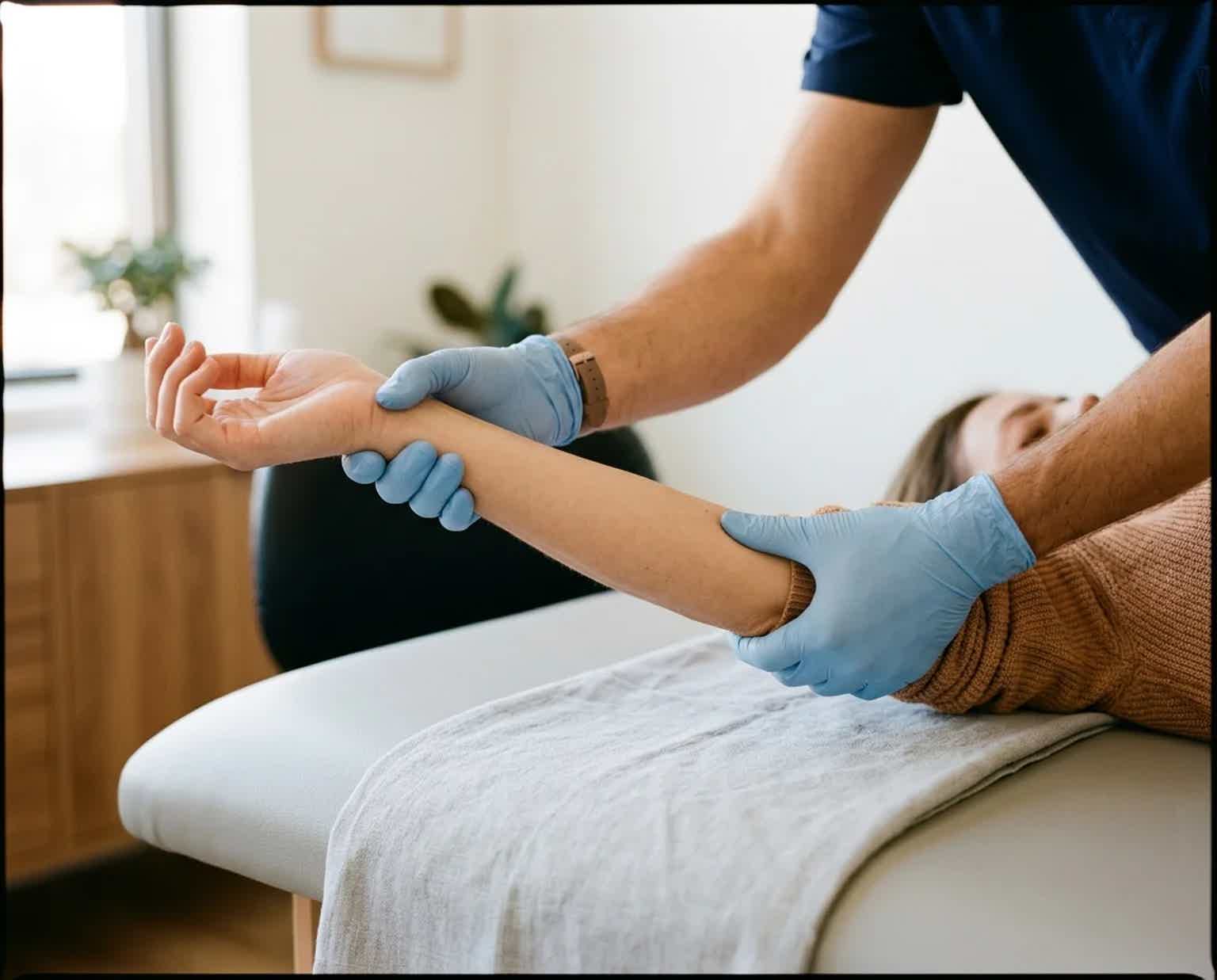
A framework for treating the whole pain system
Injection therapy is most effective when it follows a deliberate sequence. Rather than jumping straight to the strongest intervention, we work through four stages, each one creating the conditions for the next to succeed.
Calm
Before anything else, we settle an irritable system. Muscle tension, trigger points, nerve sensitization, and autonomic overactivation all raise the body's pain volume. Until these are addressed, rehabilitation won't fully take, and regenerative treatments can cause unnecessary flaring.
Correct
With guarding reduced, we address how the body is moving and loading. Faulty movement patterns, often developed to protect a painful area, can re-injure tissue if left uncorrected. This is the ideal window for physiotherapy, chiropractic, or osteopathic manual therapy work.
Repair
Once the system is less irritable and moving more efficiently, we stimulate the structural repair work: lax ligaments, degenerated tendons, unstable joints, and damaged connective tissue. Regenerative injections work best in a prepared environment, which is why sequencing matters.
Rebuild
With tissue repaired and mechanics normalized, the system becomes trainable again. Progressive rehabilitation at this stage produces real gains, not flares. The goal is a body that can handle load, activity, and life without constantly guarding against re-injury.
Most patients present with a mix of stages. We assess where you are and begin where it makes the most sense, not necessarily at step one.
The therapies we use
Each modality targets a different layer of the pain and injury system. In a single visit we often combine more than one, for example, calming muscle guarding first, then treating the underlying ligament in the same appointment.
Trigger Point Injections
Procaine injected directly into tight, irritable muscle bands to disrupt the pain-spasm cycle and restore range of motion. Most patients notice an immediate improvement in mobility and a meaningful reduction in local tenderness.
Referred pain patterns · Restricted movement · Protective guarding · Pain limiting rehabilitation
Neural Therapy
Procaine injected into nerve ganglia and scar tissue to reset abnormal nerve signaling and calm sympathetic overactivation. Particularly effective when pain is disproportionate, spreads unpredictably, or keeps recurring despite other treatment.
Pain out of proportion · Post-surgical patterns · Chronic regional pain · Old scars near pain site
Perineural Injection Therapy
A dilute dextrose solution injected along nerve pathways to downregulate sensitized nerve fibres and reduce neurogenic inflammation. Benefits are cumulative, most patients notice progressive improvement over a series of treatments.
Allodynia · Nerve entrapment · Neuropathic pain · Spreading or worsening pain
Prolotherapy
A concentrated dextrose solution injected at ligament and tendon attachment points to stimulate collagen production and connective tissue repair. A typical course is three to six sessions spaced three to four weeks apart.
Joint instability · Recurrent sprains · Tendinosis · Enthesopathy · Ligament laxity
Prolozone Therapy
Ozone combined with a proliferant solution to enhance local oxygenation and drive tissue repair, particularly effective in degenerative tissue where healing has stalled. Tends to produce a lower post-treatment flare than prolotherapy alone.
Osteoarthritis · Degenerative joint disease · Chronic tendinopathy · Inflammation-driven pain
Ozone Therapy
Medical-grade ozone injected into joints or soft tissue to activate the body's healing pathways and improve oxygenation, particularly effective in joints and discs where limited blood supply restricts natural healing access.
Joint degeneration · Disc pathology · Hypovascular tissue · Failed conservative care
Platelet-Rich Plasma (PRP)
Concentrated platelets from your own blood injected into damaged tissue to deliver growth factors directly to the repair site. Currently available at our Fernie, BC location.
Moderate to severe tendinosis · Osteoarthritis · Partial tears · Prolotherapy plateau
What a visit looks like
Every visit begins with assessment, not assumption. We take the time to understand where you are in the healing process before choosing which therapies to use.
Assess
We evaluate your current stage and identify the dominant pain drivers: myofascial, neural, structural, or a combination. Range of motion, functional movement, and provocation testing give us an objective baseline.
Select
Based on your assessment, we select the appropriate modality or combination for this visit. The goal is to match treatment to what your body actually needs right now, not a one-size protocol.
Treat
We often combine techniques within a single appointment, for example, trigger point injections to reduce guarding, immediately followed by prolotherapy to the underlying ligament.
Re-test
Before you leave the table, we re-test the same measures we started with: range of motion, provocation, strength. We want to confirm the treatment produced the expected response, and if not, adjust our plan.
Coordinate
If you're working with a physiotherapist, chiropractor, or other provider, we'll let you know the optimal timing for your next session with them. The 48 to 72 hours following a Calm-phase injection is often the most productive window for rehabilitation work.
Conditions we commonly treat
The following are some of the most common presentations we see, though this list is not exhaustive. If you're unsure whether your concern is a fit, a complimentary strategy call is a good place to start.

Unified Care
Injection therapy works best as part of a team
Regenerative injection therapy is not a replacement for rehabilitation, it's a tool that makes rehabilitation more effective. When guarding is reduced, movement patterns normalize more readily. When tissue is repaired, progressive loading produces real gains rather than flares.
When clinically appropriate, we coordinate directly with your other providers, physiotherapists, chiropractors, athletic therapists, and others, to time treatment windows and share relevant clinical findings. If you don't currently have a rehabilitation provider, we can help connect you with someone who aligns with your care plan.
Ready to find out if this is right for you?
A thorough initial consultation is where we begin, taking the time to understand your history, your goals, and what your body needs. If you'd prefer to ask a few questions first, we offer complimentary 10-minute strategy calls.